Where to Resell Walmart Clearance: Amazon FBA vs eBay vs Facebook Marketplace
Where to resell Walmart clearance depends on the item, not the platform. Amazon FBA, eBay, and Facebook Marketplace each keep a different slice of the same sale. Here is the side-by-side math.
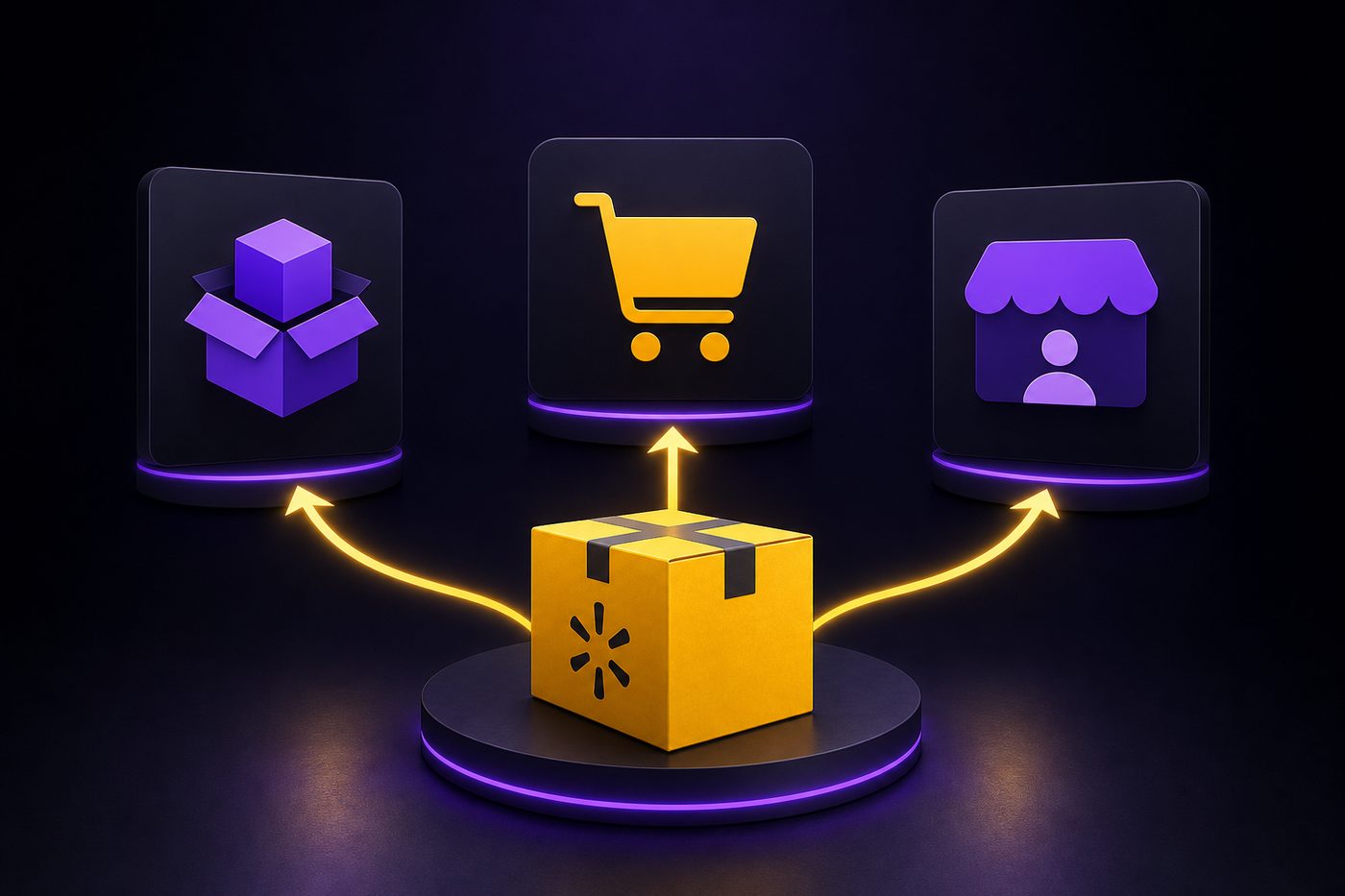
Where to Resell Walmart Clearance: Amazon FBA vs eBay vs Facebook Marketplace
By DealHawk Editorial - Published 2026-06-15
You found the deal. A rollback sticker, a penny-ending price tag, a shelf nobody else had picked clean. You bought the unit for a fraction of retail, drove it home, and now it sits on your table asking the only question that matters: where to resell Walmart clearance so the most money actually lands in your account. Not the sticker price. Not the listed price. The number that clears after the platform takes its cut, after the label prints, after the buyer pays.
Here is where most new resellers lose the profit they already earned on the shelf. They pick a channel by habit, list the item, and watch fees, shipping, and a soft local market eat the margin the clearance tag handed them. The find was good. The exit was sloppy. This guide fixes the exit.
The lie that costs you money: a sale is a sale
The comforting story goes like this. You sourced smart, so the hard part is done, and it barely matters where you list because a sale is a sale. Money is money. Pick whatever app is open.
That belief is expensive. A sale is not a sale. The exact same item, sold for the exact same price, hands you a wildly different amount depending on the channel, because each platform charges a different toll, moves at a different speed, demands a different amount of work, and reaches a different buyer. The flip is not finished when the item sells. It is finished when the money lands. Everything between the sale and the landing is where a channel either protects your margin or quietly bleeds it.
Chase the wrong channel for the item and you can turn a clean flip into a break-even chore. Match the item to the right channel and you keep the win the shelf gave you. So the real question was never where to resell Walmart clearance in general. It is where to resell this item, today, given what it is.
The fix: the FSEA match
The mechanism that breaks the lie is a matching rule, and it is worth naming so it stops being vague instinct and becomes a checklist you run on every unit. Call it the FSEA match: Fees, Speed, Effort, Audience. Every channel scores differently on those four, and every item you pull off a clearance shelf leans toward one profile. Match the item's profile to the channel's profile, and the money follows.
- Fees. What the platform skims off the top before you see a cent. Amazon skims the most, eBay lands in the middle, Facebook Marketplace local skims nothing.
- Speed. How fast the item converts to cash. Local can sell in an afternoon. Amazon can turn a slow item quickly through Prime reach. eBay sits in between and depends on demand.
- Effort. Prep, packing, shipping, gating hoops, customer messages. Amazon front-loads the effort into setup, then runs hands-off. eBay is per-item labor. Marketplace is a meetup and a handshake.
- Audience. Who is actually shopping there, and what they will pay. Amazon buyers pay a premium for new and fast. eBay buyers hunt used, niche, and out-of-stock. Marketplace buyers want a deal and want it local.
Run FSEA on an item and the channel usually picks itself. A brand-new, small, brand-restricted toy trends one way. A used, heavy, low-dollar appliance trends the exact opposite. The rest of this guide is the FSEA profile of each channel, honest about where it wins and where it robs you, so you can score any Walmart clearance find in about ten seconds.
The one number: same item, three channels, side by side
Numbers settle arguments. So take one item and run it across all three channels with real 2026 fee schedules. Say you pull a boxed home-and-kitchen item off a Walmart clearance endcap for $8 and it sells online for $40. Same item, same sale price, three exits. Here is what lands in your account after platform fees, before your $8 cost of goods.
- Amazon FBA: referral fee around 15 percent of $40 is $6.00, plus an FBA fulfillment fee near $4.98 for a large standard-size unit. Amazon takes roughly $10.98. You keep about $29.02, and Amazon does the picking, packing, and shipping.
- eBay: a final value fee around 13.6 percent of $40 plus a $0.40 order fee is about $5.84. eBay takes roughly $5.84, so the platform leaves you about $34.16. Then you buy and print the shipping label yourself, call it $8 for a medium box, so about $26.16 actually lands unless the buyer covered shipping.
- Facebook Marketplace, local pickup: fee is $0. No label. You keep the full $40 that changes hands. The catch lives below, because a local buyer rarely pays the online price.
Read that column again. Same item. Same forty dollars on the tag. Amazon nets about $29 after handing you Prime reach and a hands-off warehouse. eBay leaves about $26 landed once you cover the label, in exchange for the widest resale audience on earth. Marketplace keeps you the whole $40 with zero toll, and asks only that you meet a stranger in a parking lot and accept that the stranger will haggle. Subtract your $8 cost from any of them and the flip is green. The point is not which number is biggest in a vacuum. The point is that the numbers are not equal, and the gap between them is decided by the item, not by luck.
Amazon FBA: the premium lane with a velvet rope
Amazon Fulfillment by Amazon is the channel that scares beginners and rewards the ones who get past the rope. You ship your clearance units into Amazon's warehouse, and from there Amazon stores, picks, packs, and ships every order under the Prime badge. Your effort front-loads into prep and shipping in, then the channel runs while you sleep.
The fee stack is the real cost. The referral fee is a percentage of the sale price, commonly around 15 percent for most categories, and that headline is the part every seller knows. It is not the whole bill. On top sits the FBA fulfillment fee, tied to the item's size and weight, roughly $3.30 for a small standard unit and near $5 for a large standard unit in 2026, with oversize items climbing far higher. Add storage fees, and add long-term storage penalties if a unit sits past a year, and the honest picture is that Amazon's total take routinely runs well above the referral line once fulfillment and storage pile on. Treat 15 percent as the floor of what Amazon costs, never the ceiling. These are general 2026 figures and Amazon's own Revenue Calculator is where you confirm the exact number for a specific unit before you commit.
Then there is the velvet rope: gating and brand restrictions. Many profitable categories and brands are locked. You apply for approval, sometimes with invoices, before you can list. A clearance shelf is full of items you are not yet approved to sell, and Amazon will not tell you at the register. This is the single biggest trap for a new arbitrage seller. You buy ten units of a brand you cannot list, and the deal is now a returns problem instead of a flip.
Where Amazon wins on FSEA: new-in-box items with real demand and steady velocity. Fees are high but effort per sale is near zero, speed through Prime is strong, and the audience pays full price for new and fast. If your clearance find is a sealed, in-demand, ungated product you can restock or match to an existing listing, Amazon is often the highest-net home even after the fat fee stack, because volume and hands-off fulfillment do the heavy lifting.
When to skip Amazon: the item is used or open-box, the brand or category is gated and you are not approved, the unit is a one-off with no reliable listing, or it is bulky and low-dollar where oversize fulfillment fees swallow the margin. Close the FBA tab on those. Forcing them into FBA is how you fund Amazon's warehouse with your clearance win.
eBay: the everything-market for used and niche
eBay is the widest resale net there is. If a human somewhere wants the thing, eBay is where they search for it, especially when the thing is used, discontinued, oddly specific, or out of stock everywhere else. That reach is the whole value.
The fee is a final value fee, commonly cited around 13.6 percent for most categories plus a fixed order fee near $0.40, with the payment processing baked in rather than charged separately. Note the sharp edge many sellers miss: eBay calculates that fee on the total, including the shipping and tax the buyer pays, not just the item price. Charge the buyer for shipping and eBay still takes its cut of that shipping. Category rates vary, some collectible and media categories run higher, a few run lower, so confirm your item's category before you price. These are general 2026 estimates, not a quote.
Effort on eBay is per item and real. You photograph, you write the listing, you answer questions, you pack the box, you print the label, you handle the occasional return or dispute. There is no warehouse doing it for you. That labor is the tax you pay for reaching a buyer Amazon and Marketplace cannot.
Where eBay wins on FSEA: used goods, niche products, collectibles, discontinued clearance oddities, and anything without a clean Amazon listing. The audience is hunters. They will pay a premium for the exact out-of-stock model on your table, and they will find it through search when it would die unseen on a local app. Middle-of-the-road fees, wide audience, real per-item effort. That is the eBay trade.
When to skip eBay: the item is bulky and cheap, where shipping cost erases the margin and the final value fee still bites the shipping line. A $25 clearance fan that costs $18 to ship is not an eBay item, it is a Marketplace item. Skip eBay when the labor of listing and packing outweighs a thin margin, and skip it when the same unit would net more, hands-off, through an existing Amazon listing.
Facebook Marketplace: zero fees, local, and honest about its ceiling
Facebook Marketplace is the channel that takes nothing on a local sale and asks nothing but your time and a meetup. Buyer picks up, pays cash or a peer app, and Facebook skims zero. No listing fee, no subscription, no cut. For the right item, that is the highest-margin exit that exists, because every dollar of the sale is yours.
The honest ceiling is the local audience. A shopper browsing Marketplace wants a deal and wants it nearby, so the price a local buyer will pay usually sits below the online price the same item pulls on Amazon or eBay. That $40 online item might move for $25 to $30 locally. You keep all of it, but the ceiling is lower, and you should price against the local reality, not the online comp. Marketplace also runs on your effort in a different way: messages, no-shows, lowballs, and the meetup itself. No packing, but plenty of human friction.
Facebook does offer shipping through its own checkout, and there the free ride ends. Shipped Marketplace orders carry a selling fee commonly around 10 percent with a small minimum, applied to the full total including shipping. Useful to know, but the channel's real edge is the zero-fee local sale, so lean on that.
Where Marketplace wins on FSEA: bulky, heavy, and low-dollar items where shipping would kill any online margin. Furniture, large appliances, big-box seasonal goods, exercise gear, anything a warehouse or a shipping label makes uneconomical. Zero fees, fast local speed, low per-sale effort beyond the meetup, and an audience standing by with cash. The clearance items that are worst for Amazon and eBay are often perfect here.
When to skip Marketplace: the item is small, valuable, and shippable, where the national audiences of Amazon and eBay will pay materially more than your neighborhood will. Selling a hot, compact, in-demand unit locally for $25 when it nets $29 on Amazon or draws $45 from an eBay hunter is leaving real money in the parking lot. Skip local when the online premium beats the zero fee.
The matching rule in practice
Put FSEA to work. Here is the fast read on the kind of finds a Walmart clearance run actually produces.
- Sealed, in-demand, ungated small item that matches an existing Amazon listing and can be restocked: send it to Amazon FBA. High fees, but hands-off velocity and a premium audience net you the most.
- Used, open-box, discontinued, or oddly specific unit with no clean Amazon match: list it on eBay. The hunters are there and the search traffic finds it.
- Bulky, heavy, or low-dollar item where shipping is brutal: post it on Facebook Marketplace for local pickup. Zero fees, no label, cash today.
- Small and shippable but you are gated on Amazon: eBay is your out. The rope only blocks one lane.
- Bought a case pack of identical units: split the channel. Feed a few to Amazon for velocity, list the rest on eBay to avoid tanking your own listing, and dump any damaged or open units locally.
The discipline is running the check before you buy, not after. Standing at the shelf, ask the FSEA questions. Is this gated. Is this shippable. Who pays most for it and where. A find you cannot exit cleanly is not a deal, it is inventory you are paying to store. The best resellers score the exit at the shelf, which means the sourcing and the channel decision are the same decision.
Where the finds come from in the first place
All of this assumes the hard part is solved: you have a clearance item worth reselling in your hands. That is the part that actually eats time. Walmart clearance lives in hidden price endings and unadvertised in-store rollbacks that vary store to store and vanish once a few people know. The picked-over shelf, the drive to a store that had nothing, the firehose of a deals feed that buries the one good item under a hundred junk posts. That is the wasted-effort villain most resellers never beat.
There are real, free tools worth knowing: store apps for price checks, Slickdeals and BrickSeek for surfacing deals, cashback apps like Rakuten and Ibotta for shaving the buy price. Use them. They are legitimately useful and cost nothing.
DealHawk plays a narrower role: it is a small paid Discord community, sold through Whop, focused on Walmart in-store clearance drops and online price-error and clearance gems. The pitch is sourcing signal, a feed of drops so you spend your hours flipping instead of hunting dead shelves. That is a general description of what the community is for, not a promise of income. What you net still depends on the items you buy, the channels you match them to with FSEA, and the market on the day you sell.
The verifiable part: DealHawk holds 5.0 stars across 25 verified Whop reviews, a clean 25 out of 25 five-star record. One member, Talahaina Smikle, writes, "I love this group! I've saved so much money, time, and gas on clearance finds. The small fee was worth every penny!" Another, Elias Moya, calls it "the only group you need to be in. Amazing instore clearance drops and online gems." That review count is exactly that, a review count, and nothing else about the community's size is public. The operator is anonymous, with no public founder name or bio, and that is a plain fact worth knowing before you decide.
On price, the honest terms: intro pricing starts at $10 on one plan or $15 on a second, whichever Whop shows you at checkout, billed up front on day one, then renewing at $25 per month. There is no trial period, so money changes hands from the start. You can cancel any time in one click from the Whop dashboard, no call and no email and no retention pitch. The live Whop listing is the source of truth, so confirm the current offer there before you buy.
Close this tab if you want a machine that prints money while you watch. Reselling is real work with real fees and real returns, and no feed changes that. But if the bottleneck is finding the drops before the shelf is stripped, a focused sourcing feed can hand back the hours you now burn driving to empty stores. If that is your bottleneck, you can check the current DealHawk terms on Whop and decide with the numbers in front of you.
FAQ
Where should I resell Walmart clearance for the most profit?
It depends on the item, which is the whole point. Run the FSEA match. New, small, ungated, in-demand items usually net most on Amazon FBA. Used, niche, or discontinued items do best on eBay. Bulky or low-dollar items keep the most margin on Facebook Marketplace local, because the fee is zero. There is no single best channel, only the best channel for that unit.
Is Amazon FBA worth it if the fees are so high?
Often yes, for the right item. The referral fee near 15 percent plus fulfillment fees is a heavy stack, but Amazon handles storage, packing, shipping, and Prime reach, so your effort per sale drops to near zero and velocity climbs. On a sealed, in-demand, ungated product you can restock, the hands-off volume can out-earn a lower-fee channel that demands your labor on every sale. On a used one-off, it is not worth it.
Why is eBay better for used and niche clearance items?
Because the audience is hunters using search to find exactly the out-of-stock or discontinued item you have. Amazon rewards new-in-box with a clean listing, and local Marketplace reaches only your area. eBay's search-driven, nationwide market is where an odd or used clearance find actually meets its buyer, at a price that reflects scarcity, in exchange for a final value fee around 13.6 percent and your listing labor.
Does Facebook Marketplace really charge no fees?
On local pickup sales, yes, the fee is zero and you keep the full amount that changes hands. The tradeoff is a local audience that pays less than online buyers, plus meetup friction like messages and no-shows. If you use Facebook's own shipping checkout, a selling fee around 10 percent applies to the total, so the zero-fee advantage lives specifically in local, in-person sales.
What is DealHawk and what does it actually do?
DealHawk is a small paid Discord community sold through Whop that focuses on Walmart in-store clearance drops and online price-error and clearance gems. It is a sourcing feed meant to save you the hunting time, not an income promise. It holds 5.0 stars across 25 verified Whop reviews, the operator is anonymous, intro pricing starts at $10 or $15 depending on the plan Whop shows and renews at $25 per month, billed up front, cancellable in one click. Confirm current terms on the live Whop listing.
Ready to see the live alerts?
Check the current intro offer on Whop. Cancel any time.
View current offerKeep reading
Who DealHawk Is For (and Who Should Skip It): A 2026 Decision Guide
Who is DealHawk for? We skip the star rating and run your ZIP, drive radius, free time, and goal thr...
DealHawk Review (2026): Is This Walmart Clearance Discord Worth $25 a Month?
An honest DealHawk review: what the paid Walmart clearance Discord actually is, the real pricing (in...
Anonymous Operators in Reselling: How to Vet a Faceless Discord Before Paying
Building anonymous whop discord trust without a founder bio: the signal checklist for vetting a face...
Is DealHawk Worth It If You Live Far From Walmart? A Distance-Based Decision
Wondering if DealHawk is worth it far from Walmart? We split alerts into two lanes, run the drive-ti...
