Who DealHawk Is For (and Who Should Skip It): A 2026 Decision Guide
Who is DealHawk for? We skip the star rating and run your ZIP, drive radius, free time, and goal through a four-dial fit test, with honest break-even math by buyer type.
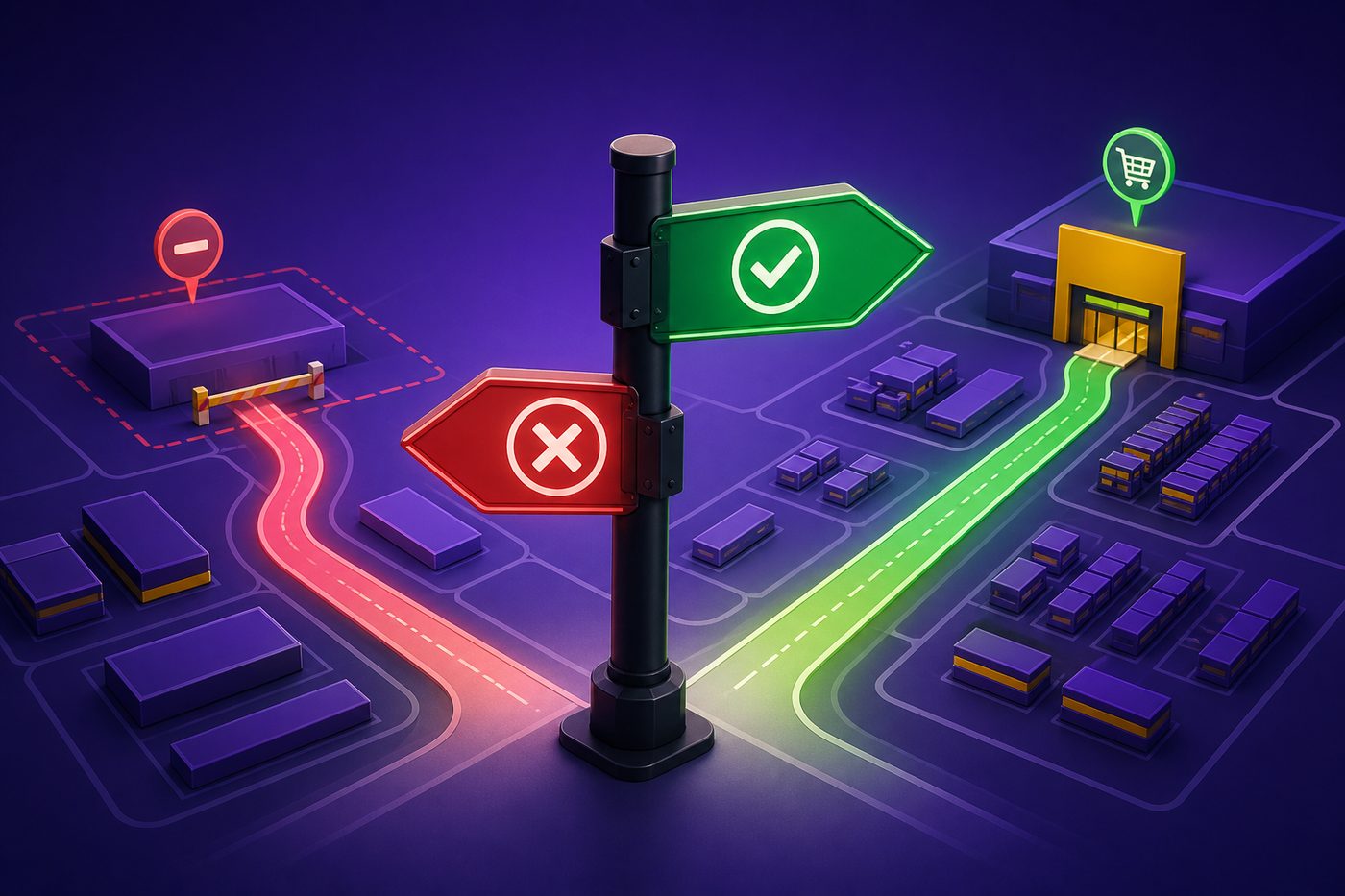
Who DealHawk Is For (and Who Should Skip It): A 2026 Decision Guide
By DealHawk Editorial - Published 2026-07-12
Who is DealHawk for? Not the person a five-star badge was built to impress. You. The specific human reading this, with a specific ZIP code, a specific drive to the nearest Walmart, a specific pile of free hours, and a specific reason for wanting deal alerts at all. Those four dials decide whether a paid deal group pays you back or quietly drains you. The star rating decides nothing. This 2026 decision guide sorts the right buyers from the wrong ones, and it tells the wrong ones to close the tab, in plain words, before anyone touches your card.
Most reviews do the opposite. They hand you a score and a shrug, as if a number a stranger left could tell you what your Tuesday looks like. It can't. A perfect rating from a fast-moving reseller who lives four minutes from a Supercenter says nothing about a rural parent with one car and ninety spare minutes a week. Same product, opposite verdict. So we're going to skip the applause and run your actual situation through a short, honest test, then price the answer against twenty-five dollars a month for four different kinds of buyer. By the end you'll have a clean yes or a clean no, and either one saves you money.
The one lie this whole decision runs on
The lie is short and it wears the costume of common sense: if it works for other people, it'll work for me. Twenty-five verified five-star reviews, a wall of happy members, so the thing must be good, so it must be good for me too. That last step is where wallets go to die. "Good" and "good for you" are different measurements, and the gap between them is exactly your ZIP code, your drive radius, your free time, and your goal.
Here's why the lie is so sticky. Every deal group, every course, every tool leans its whole pitch on borrowed success. Screenshots of someone else's haul. A testimonial from someone else's flip. A star average built from someone else's Tuesday. None of it is fake, and none of it is yours. The villain here is the transfer, the sleight of hand that takes a stranger's result and slides it under your name, as if reachability and free time came standard in the box. They don't. They're set by your life, and your life is not the reviewer's.
Believe the transfer and you buy on the wrong evidence. You look at the badge instead of the map. You picture the reseller's win and pay the reseller's price, then discover the win needed a nine-minute drive and twenty flexible hours you don't have. The rating was honest. It was just answering a question you never asked. The question that matters is not "is this good," it's "is this good for a person shaped like me," and no star average on earth can answer it. Only your four dials can.
The fix: the four-dial fit test (who is DealHawk for, decided by you)
Break the lie with a named tool, because a named test stops being a vibe and starts being a checklist you can run in two minutes. Call it the four-dial fit test. Fit is not a star rating you inherit. Fit is set by four dials you already own: your ZIP, your drive radius, your free time, and your goal. Turn each one honestly, read where they land, and you have your answer to who is DealHawk for without borrowing a single stranger's opinion.
Here are the four dials, and what each one actually controls.
- ZIP and store density. How many Walmart Supercenters sit within reasonable reach, and how often they roll clearance. One tired store forty minutes out is a thin, slow feed for you no matter how loud the group is. Three busy stores in a fifteen-mile ring is a live wire. Density is the raw supply the in-store lane draws from.
- Drive radius. How far you'll actually go, and what that drive costs in gas, wear, and time. This dial taxes the in-store clearance lane and leaves the online lane untouched. Turn it wide and store runs stay in play. Turn it narrow, or turn it honest about a long commute, and the store side thins out fast.
- Free time. The hours you can honestly point at a shelf. A deal alert is a raw material, not a finished profit. It still needs a drive, a checkout, a listing, a shipment. No spare hours, no conversion, and the feed just becomes guilt with notifications.
- Goal. Why you want in at all. Three real goals split cleanly: save money on stuff you already buy, earn a side income flipping, or run a full reselling operation. Each goal reads the same feed completely differently, and each has its own break-even. Skip this dial and you'll judge the product against the wrong scoreboard.
Run all four and a picture snaps into focus that no review ever gave you. Two dials matter most, because they gate the two lanes DealHawk actually runs. Remember that split, it carries the rest of this guide: there is an in-store lane (Walmart clearance drops, physical shelves, first come first served) and an online lane (price-error and clearance "gem" deals you buy from your couch). Drive radius and store density gate the in-store lane. The online lane ignores both. That's the whole reason a single star rating is useless here. One number can't grade two lanes that answer to different dials.
Why the star rating is someone else's map
Picture the review wall as a stack of maps, each one drawn by a person standing somewhere you're not. Talahaina's map says she saved money, time, and gas on clearance finds. Real, verified, five stars. But her map is drawn from her ZIP, her radius, her hours. Trace your route on it and you might find the road she took doesn't exist where you live. A perfect map of the wrong city gets you lost with total confidence.
This is not a knock on the reviews. Twenty-five verified five-star reviews is a clean, honest signal that the people who fit the product were glad they joined. It tells you the thing works for the people it works for. It cannot tell you that you're one of them, because it has no idea what your four dials read. The badge measures satisfaction among the fitted. It does not measure whether you fit. Confuse the two and you paid for someone else's map and called it your directions.
So use the reviews for what they're worth and not a cent more. They retire one worry: is this a scam, a dead feed, a bait product. The perfect record answers no. They cannot retire the only question that decides your outcome: do your dials line up with the lanes this feed actually serves. That one you answer yourself, with the test, before you read a single price.
The one number, run four ways: honest break-even by buyer type
Now the figure that ends the argument in real currency. The renewal price is $25 a month, so the only honest question is whether your kind of buyer clears twenty-five dollars of value a month, after effort, from the lanes your dials actually reach. Not whether the product is good. Whether it nets you more than it costs. Here it is for four buyers, with general, roundable, clearly-illustrative numbers, never a promise.
The beginner flipper. Part-time, learning, small bankroll, a few evenings free. Your break-even is one clean flip a month that nets twenty-five dollars over cost. Say you catch a clearance item at $12 and resell it for $45. Marketplace fees run roughly 13 percent on eBay or about 15 percent referral on Amazon, so on a $45 sale you keep somewhere near $38 before shipping, then subtract your $12 cost. That single flip clears the month with room to spare. The catch isn't the twenty-five dollars, it's the learning tax: your first month you'll spend hours figuring out what sells, and you may net nothing while you learn. So the honest beginner break-even is not one flip, it's the patience to eat a slow first month and let month two prove it. If you have a couple of free evenings and the stomach for a slow start, the price is small enough to be a cheap tuition. If you have neither, the feed will out-talk your free time and you'll churn.
The busy family shopper. No reselling, no flips, you just want to stop overpaying on things your household already buys. Your break-even is different and often easier: save twenty-five dollars a month on stuff you'd have bought anyway. A few real clearance catches on household staples, diapers, detergent, seasonal gear, and you're there without ever listing a thing. But your true dials are time and gas. If the catches sit at a store twenty-five miles out and you're making a special trip, the drive can eat the saving whole. The family-shopper break-even is only real when the clearance sits at a store you already pass, or when the online gem lane surfaces enough to clear twenty-five on its own. Shop it lazy and local and it pays. Chase it across the county and it doesn't.
The full-time reseller. High volume, real hours, resale certificate, this is the job. For you twenty-five dollars is a rounding error. One decent flip clears the month and you'll do dozens. Your break-even isn't the price, it's the signal: does this feed surface deals you'd have missed, fast enough to beat the crowd, in categories you actually move? A single overlooked pallet a month justifies the sub ten times over. The real risk for you isn't cost, it's redundancy. If you already run BrickSeek, store apps, and three other feeds, the question is marginal: does DealHawk add reach you don't already have? If yes, it's the cheapest sourcing lead you'll buy all year. If it just echoes feeds you already watch, skip it, not because it's bad, because you already own its map.
The rural shopper. One store, a long drive, maybe thirty or forty minutes each way. Distance taxes the in-store lane hard. A round trip can cost forty dollars once you price gas at roughly twenty cents a mile and your own time at even twenty an hour, which means a single clearance find has to clear forty before the drive pays, before you've touched the subscription. For you the in-store lane runs red on most single deals unless you batch several into one deliberate run. So your break-even is brutally simple: ignore the store side and ask whether the online price-error and gem lane alone clears twenty-five dollars a month. That lane charges distance nothing, a farmhouse and a downtown apartment check out at the same price. If the online lane pays for you, distance is irrelevant. If it doesn't, no in-store feed can rescue it from thirty-five miles out, and you should pass without a second thought.
Four buyers, four different break-evens, one price. That's the point the star rating buried: the same twenty-five dollars is a bargain for one dial-set and a leak for another. Your job is to know which one you are before you pay, not after.
This is you if
Here's the green light, stated plainly so you can match yourself against it. DealHawk fits you if your dials read like one of these.
- You live inside a tight drive of one or more busy Walmarts, have a few flexible hours, and want a side income flipping clearance. Your in-store lane is live, your free time can convert it, and one flip clears the price.
- You're a working reseller hunting marginal sourcing reach, and a quick honest look says this feed surfaces deals your current tools miss. The cost is trivial against a single caught pallet.
- You're a family shopper whose Walmart sits on a route you already drive, and you want to stop overpaying on household staples without listing anything. Local plus lazy plus real clearance equals real savings.
- You live far out but will genuinely work the online gem lane, treating any store run as an occasional batched bonus. Distance can't tax the lane you're actually using.
If you saw yourself above, the low up-front intro and one-click cancel make this a cheap, reversible test of your own math. Not a leap. A trial run you control.
Close this tab if this is you
Now the honest part most affiliate pages will never write, because pushing the wrong buyer away costs a commission. Do it anyway. Close this tab if your dials read like any of these, and keep your twenty-five dollars.
- You bought the lie. You're joining because the reviews are perfect, full stop, without checking whether your ZIP, radius, time, or goal line up with the lanes. A stranger's five stars is not your directions. If that's your only reason, walk away.
- You have no free hours. A deal feed is raw material that still needs a drive, a checkout, a listing. With zero spare time, every ping becomes a guilt notification and the sub is money for a feeling of productivity you'll resent.
- You live far from your only Walmart, refuse to touch the online lane, and only want in-store runs. Your one lane is taxed toward zero by distance, and no feed fixes a map. You'd pay monthly to watch pings you can't reach.
- You already run a stack of sourcing tools and just want more of the same. If DealHawk only echoes feeds you own, it adds cost, not reach. Skip it until you have a real gap to fill.
- You're expecting a firehose that prints money while you watch, or income promised in advance. Nobody honest sells that, and this guide won't pretend to. Reselling is work, clearance is a race, and no subscription changes either.
If any of those was you, this article just handed you a clean, money-saving no, which is the most valuable thing a review can give the wrong buyer. Taking your no seriously is exactly how you know the yes is worth trusting.
What DealHawk actually is, stated straight
Now the vendor facts, kept separate from everything above so you can weigh them without the sales gloss. DealHawk is a small paid Discord community sold through Whop, built on two lanes: Walmart in-store clearance drops and online price-error and clearance "gem" deals. That two-lane shape isn't marketing, it's the reason your drive radius matters so much, since one lane answers to distance and the other ignores it entirely.
Pricing, and this is the only pricing to trust: the intro price starts at $10 on one plan or $15 on a second, depending on which plan Whop shows you at checkout. That intro is billed up front, money moves on day one. It renews at $25 a month. There is no free trial, so don't join expecting a costless look around. You can cancel any time in one click from the Whop dashboard, with no call, no email, and no retention gauntlet. The live listing controls the offer, so always confirm today's terms on the current Whop listing before you buy.
The proof is thin but clean, and worth naming exactly. DealHawk holds 5.0 stars across 25 verified Whop reviews, a perfect 25-for-25 five-star run. Read that precisely: 25 is the count of reviews, not the size of the community. The member count isn't public, and anyone quoting one is inventing it. A few verbatim voices:
- Elias Moya: "The only group you need to be in. Amazing instore clearance drops and online gems. Love this group."
- Talahaina Smikle: "I love this group! I've saved so much money, time, and gas on clearance finds. The small fee was worth every penny!"
- Diana Salazar: "This Group is Amazing, all the people are so kind and helpful, don't hesitate to join if you want to learn how make money."
One more fact to weigh honestly: the operator is anonymous. No public founder name, no photo, no bio. That's a genuine consideration, not a scandal, and you deserve it on the table with everything else. Small community, a perfect but limited review count, an anonymous operator, a low up-front cost, and a one-click exit. Price those facts against your own four dials, not against the applause.
The verdict, one line per buyer
So, who is DealHawk for? Run the four-dial fit test and here's the answer for each buyer, no hedging.
- Beginner flipper: a yes if you have a couple of free evenings and the patience to eat a slow first month. The learning tax is real, but one $25-plus flip clears the price and the intro is cheap tuition. A no if you have no time to learn.
- Busy family shopper: a yes only when the clearance sits on a route you already drive or the online lane pays on its own. Local and lazy, it saves. Chased across the county, the gas eats the win, so pass.
- Full-time reseller: a yes if a quick look shows it adds sourcing reach your current tools miss, since twenty-five dollars is nothing against one caught pallet. A no if it only echoes feeds you already run.
- Rural shopper: a yes if you'll work the online gem lane, where distance costs nothing. A firm no if you only want in-store runs from thirty-plus miles out, because the drive loses money on most single deals no matter how good the alert.
The measure was never the star rating. It was whether your ZIP, your radius, your hours, and your goal line up with the lanes this feed serves. Run your four dials, match yourself to the verdict above, and you'll never be sold by a stranger's map again. If your dials read yes and you want to test the fit against your own math, you can check the current DealHawk offer on Whop and confirm today's terms yourself. If they read no, you just kept your money, which is a win the applause would never have handed you.
FAQ
Who is DealHawk for, in one sentence?
DealHawk fits shoppers and resellers whose ZIP, drive radius, free time, and goal line up with its two lanes: nearby Walmart clearance runs for people with time to convert them, and online price-error gems for anyone with a phone, including rural buyers who skip the in-store side.
Who should skip DealHawk?
Skip it if you have no free hours to act on alerts, if you live far from your only Walmart and refuse to work the online lane, if you already run a full stack of sourcing tools that this only echoes, or if you're joining purely because the reviews are five stars without checking your own fit.
Does DealHawk have a free trial?
No. There is no free trial. The intro price ($10 or $15 depending on the plan Whop shows) is billed up front on day one, then it renews at $25 a month. You can cancel any time in one click from the Whop dashboard, with no call or email.
How do I know if it will pay off for me?
Run the break-even for your buyer type against $25 a month. A beginner flipper needs one clean flip netting $25 after fees; a family shopper needs $25 in real savings on things they'd buy anyway; a reseller clears it on a single caught deal; a rural shopper needs the online lane alone to clear $25, since distance taxes the in-store lane.
Is a 5.0-star rating enough reason to join?
No. Twenty-five verified five-star reviews prove the product works for the people it fits, but they can't tell you that you fit. That 25 is the review count, not the member count, and the community size isn't public. Use your four-dial fit test to decide, and treat the rating as a scam check, not directions.
Ready to see the live alerts?
Check the current intro offer on Whop. Cancel any time.
View current offerKeep reading
DealHawk Review (2026): Is This Walmart Clearance Discord Worth $25 a Month?
An honest DealHawk review: what the paid Walmart clearance Discord actually is, the real pricing (in...
Anonymous Operators in Reselling: How to Vet a Faceless Discord Before Paying
Building anonymous whop discord trust without a founder bio: the signal checklist for vetting a face...
Is DealHawk Worth It If You Live Far From Walmart? A Distance-Based Decision
Wondering if DealHawk is worth it far from Walmart? We split alerts into two lanes, run the drive-ti...
DealHawk vs Free Deal Tools (Slickdeals, BrickSeek, Store Apps): An Honest Comparison
A straight DealHawk vs Slickdeals BrickSeek comparison: free tools are discovery, DealHawk is compre...
