Is DealHawk Worth It If You Live Far From Walmart? A Distance-Based Decision
Wondering if DealHawk is worth it far from Walmart? We split alerts into two lanes, run the drive-time break-even, and tell rural readers exactly when to skip the in-store side.
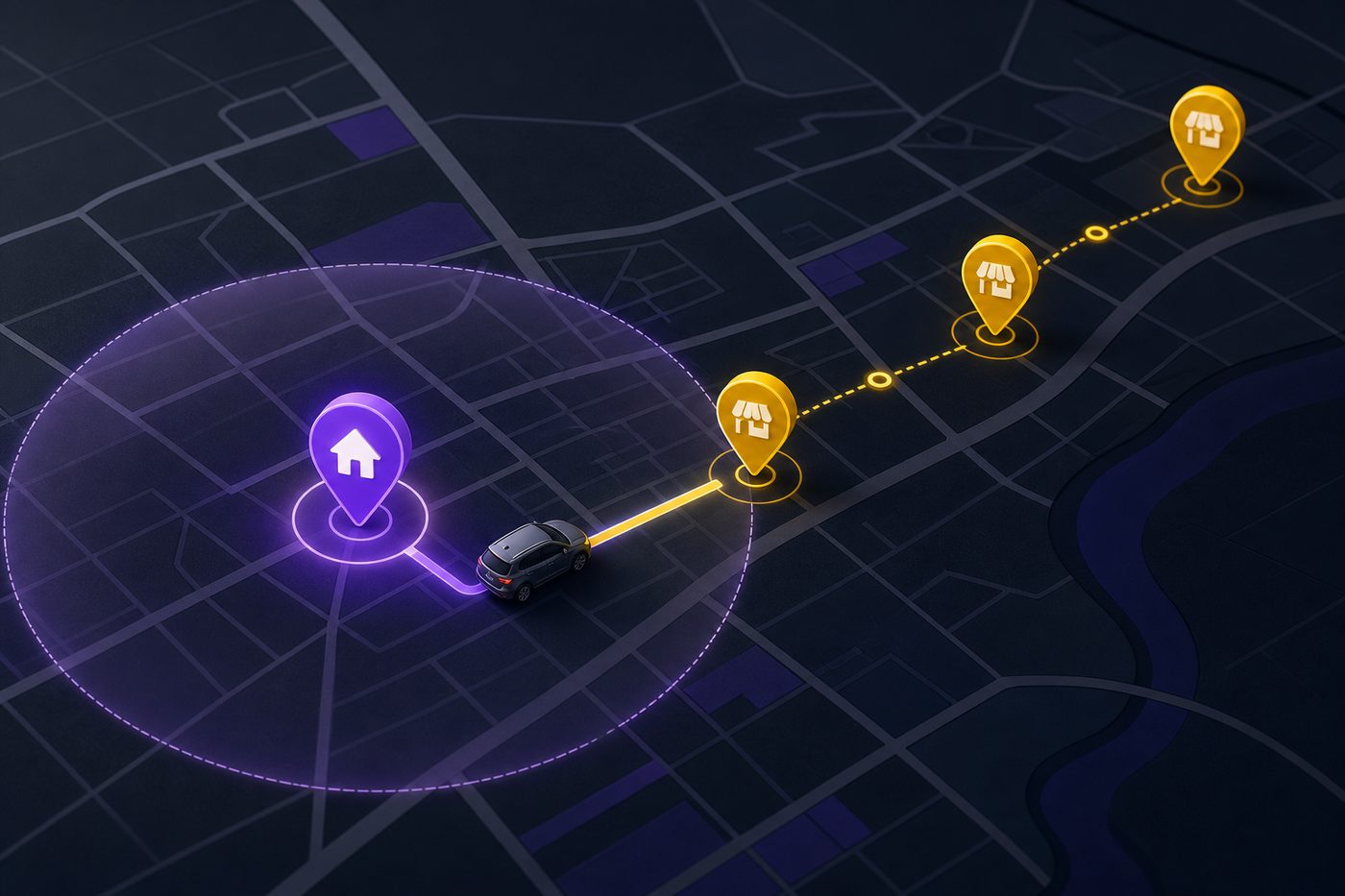
Is DealHawk Worth It If You Live Far From Walmart? A Distance-Based Decision
By DealHawk Editorial - Published 2026-07-05
Here is the question nobody selling you a deal group wants to answer honestly: is DealHawk worth it if you live far from Walmart? Not for the person who lives four minutes from a Supercenter. For you. The one with a thirty-mile drive, one nearby store, and a tank of gas that costs real money. Distance changes the math completely, and most reviews pretend it doesn't. This one won't.
You already sense the tension. A clearance alert only pays if you can reach the shelf before someone else clears it. When the store is close, speed is cheap. When the store is an hour away, every ping carries a hidden invoice: gas, wear, and the slice of your day you'll never get back. So the real decision is not "good deals or bad deals." It's whether the deals you can actually reach clear the cost of reaching them, plus twenty-five dollars a month. Let's settle it with numbers, not vibes.
The lie that quietly drains your wallet
The lie sounds like a feature. More alerts always means more value. Every deal group leans on it. Bigger feed, more pings, more screenshots of sold-out tags, look how much we post. The pitch treats volume as the product. Join and the firehose turns on, and somewhere in that torrent is your payday.
Volume is not value. A deal you cannot reach is not a deal, it's a notification. The firehose buries the one good ping under forty you can't act on, and if the store is far, most of them are ones you can't act on. The villain here is the counter itself, the group that brags about alert count while staying dead silent on the only question that matters to a remote shopper: can I get there before the margin evaporates? Alert count is the vanity metric. Reachable margin is the real one.
Believe the lie and you overpay in two directions. You pay the subscription for a feed sized to someone else's zip code, and you pay again in gas chasing pings that were never yours to catch. You feel busy. Your odometer climbs. Your bank balance doesn't. That's the trap this article exists to spring you from.
The fix: usable value equals alert quality times reachability
Break the lie with one formula. Usable value equals alert quality times reachability. Both terms multiply, which is the whole point. A perfect alert with zero reachability equals zero. A ninety-percent deal you can't get to before it's gone is worth exactly nothing to you, no matter how loud the group cheers. Multiplication is brutal that way. Any term at zero zeroes the whole line.
Alert quality is the part every group advertises: how deep the discount runs, how fresh the tip is, how reliable the source. Reachability is the part they hide, and it's the term distance controls. Reachability is your honest odds of standing at that shelf, item in hand, before the clock kills the margin. Close to the store, reachability sits near one. Far from the store, it slides toward zero on anything time-sensitive.
Now the crucial move, the one that saves this decision for rural readers. There isn't one feed. There are two lanes, and distance hits them completely differently.
- The in-store lane. Walmart clearance drops. Physical tags, physical shelves, one specific store, first come first served. This lane runs entirely on reachability. Distance taxes it hard and, past a point, zeroes it out.
- The online lane. Price-error and clearance "gem" deals you buy from your couch. Reachability here is basically one for everyone with a phone and a card. A remote farmhouse and a downtown apartment stand on identical footing. Distance charges this lane nothing.
Read that split twice, because it is the entire answer to DealHawk far from Walmart. The in-store lane is the one distance can kill. The online lane is immune. Any honest verdict has to grade the two lanes separately instead of smearing them into one "is it worth it" mush. Most reviews never make the cut. That's why most reviews are useless to you.
Why distance zeroes out a perfect ping
Walmart clearance is a race, and the finish line moves. A store rolls a pallet of marked-down stock onto the floor, the tags print at deep cuts, and the quantity is whatever happens to be sitting there. Sometimes it's two units. The people closest to that store, or already parked in the lot, sweep the good stuff first. This is not a flaw in any alert. It's physics. Same pallet, same shelf, same clock, and you're an hour behind whoever lives across the street.
So a flawless alert lands on your phone. Deep discount, real item, genuinely great. You live thirty-five minutes out. Do the honest odds. By the time you finish the drive, walk in, and reach the aisle, the fast-mover units are gone and you're staring at an empty peg. Alert quality was a ten. Reachability was near zero. Multiply them: near zero. The ping felt like money and delivered a wasted trip and a lighter tank.
This is exactly why alert count is a lie for you specifically. A close-in shopper converts a high share of in-store pings because reachability rides near one. Their formula rewards volume, so more alerts genuinely does mean more value, for them. Copy their enthusiasm from a rural address and you inherit their volume with a fraction of their reachability. Same feed, a completely different payoff, and nobody warned you because the counter only measures the numerator.
The one number: your drive-time break-even
Here's the figure that ends the argument in your real currency. Every in-store deal has a break-even, and once your round-trip cost clears the deal's margin, you skip it. Not "maybe." Skip it. The alert was real and the trip still loses money. Two things can be true at once.
Round-trip cost has two parts, and both are real money even when one hides.
- Gas and wear. A car at 25 mpg with fuel near $3.50 a gallon burns roughly fourteen cents a mile in gas alone. Add tires, brakes, and depreciation and all-in running cost lands somewhere around fifty to sixty-five cents a mile, close to the IRS mileage figure. For a clean, conservative estimate, use twenty cents a mile just for the gas you can feel. These are general, roundable numbers, not promises.
- Your time. The part that hides. Price an hour of your day at whatever it's honestly worth to you, twenty dollars is a reasonable placeholder. A trip isn't free just because the calendar looked empty.
Now a worked example. Say you live twenty-five miles from your Walmart. Round trip is fifty miles. Gas at twenty cents a mile is about ten dollars. Drive time at roughly forty miles per hour plus fifteen minutes in the store is about ninety minutes, so at twenty dollars an hour that's thirty dollars of your day. Total round-trip cost lands near forty dollars. That forty is your break-even. A clearance find has to save or net you more than forty dollars before the trip pays. A tag that saves twelve is a beautiful alert and a losing drive. You'd hand Walmart a twelve-dollar win and eat twenty-eight in cost to collect it.
Run your own line once and keep it taped in your head:
- Round-trip miles times your per-mile cost equals your gas number.
- Round-trip minutes divided by sixty, times your hourly value, equals your time number.
- Gas plus time equals your break-even. Any in-store deal below it, you let go without a flinch.
This single number defuses the whole firehose. You stop reacting to every ping and start filtering on one question: does this specific deal's margin clear my specific break-even? Most pings won't, at distance. That's not the group failing. That's the map. And knowing your number turns a guilt-trip feed into a short, high-value shortlist.
How far is too far
Turn the break-even around and it hands you a distance ceiling. If a typical in-store clearance flip nets, say, thirty to fifty dollars, and your all-in cost runs roughly a dollar per round-trip mile once you honestly price time, then a fifty-mile round trip, twenty-five miles each way, already eats most single-deal margins. Past that, the in-store lane runs red on any one deal. As a blunt rule of thumb, beyond about twenty-five to thirty miles one way, treat solo in-store trips as losers by default and demand a special reason to go.
One lever bends the ceiling, and it's the move sharp remote resellers actually use: batch the trip. The break-even is per drive, not per deal. Stack three or four solid deals into one run and you amortize that forty-dollar cost across all of them. Now the drive needs one big deal or a few medium ones to clear, not a single tag carrying the whole trip. A patient remote shopper who waits for the feed to load up two or three reachable, high-margin pings and then makes one deliberate run can make distance survivable, where the same person chasing single pings bleeds gas all month.
Be honest about the flip side. Batching needs deal density near your one store and the discipline to wait. If your local Walmart rarely produces multiple strong drops in the same window, there's nothing to batch, and the in-store lane stays underwater no matter how you slice it. At that point, stop trying to rescue it. The map has spoken. Which brings us to the lane distance can't touch.
The online lane works at any distance
Here's the part that keeps this from being a rural rejection letter. The online side of the room, the price-error and clearance gem deals you buy from your phone, has reachability near one for everyone. Fifteen miles or a hundred and fifty, your odds of completing an online checkout are the same. Distance charges this lane nothing. Your break-even isn't gas plus time. It's shipping and a couple of clicks.
An online price error is a mispriced listing, an item ringing up far below its real worth because a system, a decimal, or a clearance cascade slipped. You buy it shipped to your door and either save hard on something you'd have bought anyway or resell the gap. No drive, no shelf race, no empty peg. For a remote shopper, this is the honest core of the value. When the in-store lane is dead to you on distance, the online lane is where a subscription still has to earn its keep.
So reframe the whole decision. If you're far from Walmart, don't weigh the full feed against the price. Weigh the online lane alone against the price. Ask a narrow, honest question: over a normal month, does the online gem side surface enough reachable value to clear twenty-five dollars, ignoring the in-store pings entirely? If yes, distance is irrelevant and you're buying a phone-based deal feed that happens to also post store drops you'll usually skip. If no, no in-store lane can rescue it for you, and you should pass. That is the clean, distance-adjusted test, and it's the one this article was built to hand you.
Close this tab if this is you
Trust runs on honesty first, so here's who should not buy, said plainly. Close this tab if you live far from your Walmart, refuse to shop the online lane, and only want the in-store clearance runs. For you, reachability on the one lane you care about sits near zero, and no feed fixes a map. You'd pay twenty-five dollars a month to watch other people catch pings you can't reach. Don't.
Close it too if you won't run your own break-even. A deal group multiplies whatever discipline you bring. Bring none and the firehose just makes you feel busy while your odometer climbs. And close it if the online lane's monthly value, by your own honest read, doesn't clear the price. No article should talk you into a subscription your own math rejects.
Keep reading if you'll work the online lane regardless of distance, or if you're close enough, or willing to batch, that the in-store lane clears your break-even. For those readers, distance is a filter you already know how to run, not a wall. Everyone else just got handed a clean, money-saving no, which is the most valuable thing a review can give the wrong buyer.
What DealHawk actually is, stated straight
Now the vendor facts, kept separate from everything above so you can weigh them cleanly. DealHawk is a small paid Discord community sold through Whop, built around two things: Walmart in-store clearance drops and online price-error and clearance gem deals. That two-lane structure isn't marketing, it's the whole reason distance treats this product so unevenly, which is why the split has run through this entire piece.
Pricing, and this is the only pricing to trust: the intro price starts at $10 on one plan or $15 on a second, depending on which Whop shows you at checkout. That intro is billed up front, money moves on day one. It renews at $25 a month. There is no free trial. You can cancel any time in one click from the Whop dashboard, no call, no email, no retention gauntlet. Always confirm the live terms on the current Whop listing before you buy, since the listing controls the offer.
The proof is thin but clean and worth naming exactly. DealHawk holds 5.0 stars across 25 verified Whop reviews, a perfect 25-for-25 five-star run. Read that precisely: 25 is the count of reviews, not the size of the community. The member count isn't public, and anyone quoting one is inventing it. A few verbatim voices:
- Talahaina Smikle: "I love this group! I've saved so much money, time, and gas on clearance finds. The small fee was worth every penny!"
- Elias Moya: "The only group you need to be in. Amazing instore clearance drops and online gems. Love this group."
- Diana Salazar: "This Group is Amazing, all the people are so kind and helpful, don't hesitate to join if you want to learn how make money."
Notice that first review names time and gas directly, the exact currencies distance taxes. That's a member describing reachability paying off, not a slogan. And one more fact to weigh honestly: the operator is anonymous. No public founder name, no photo, no bio. That's a genuine consideration, not a scandal, and you deserve to have it on the table with everything else. Small community, perfect but limited review count, anonymous operator, low up-front cost, one-click exit. Price those facts against your own break-even, not against hype.
The DealHawk far from Walmart verdict
So, is DealHawk worth it far from Walmart? The answer splits exactly where the two lanes do, and now you can run it yourself. The in-store lane is worth it only if you're inside your break-even distance or willing to batch trips into one deliberate run. Past that, it's a losing drive on any single deal, and you should expect to skip most store pings without guilt. The online gem lane is worth it at any distance, and for a remote reader it's the entire case. Weigh that lane alone against twenty-five dollars a month, and if it clears, the low up-front price and one-click cancel make it a cheap, reversible test.
Do the honest thing before you pay. Write your break-even, the forty-dollar-ish number from your own miles and time, and admit which lanes you'll actually work. If you'll shop online and treat store runs as an occasional batched bonus, this can pay from a farmhouse as easily as an apartment. If you only want in-store runs and live an hour out, keep your money. The measure was never how many alerts fire. It was how much reachable margin survives after the drive. Run that number, and you'll never be sold by a counter again. When you're ready to test the online lane against your own math, you can check the current DealHawk offer on Whop and confirm today's terms yourself.
FAQ
Is DealHawk worth it if I live far from Walmart?
It depends on which lane you work. The in-store clearance lane loses value fast with distance, because reachability drops toward zero on time-sensitive drops. The online price-error and gem lane works at any distance. If you'll shop the online lane, weigh it alone against $25 a month; if you only want in-store runs and live far out, it likely isn't worth it.
How far is too far for Walmart clearance runs?
Roughly past twenty-five to thirty miles one way, a single-deal in-store trip usually costs more in gas and time than one clearance find nets. Beyond that, treat solo runs as losers by default and only go when you can batch several strong deals into one trip to spread the cost.
How do I calculate my drive-time break-even?
Multiply round-trip miles by your per-mile cost (around twenty cents for gas, more all-in) to get your gas number, then multiply round-trip hours by what an hour of your time is worth to get your time number. Add them. A twenty-five-mile-out trip often lands near forty dollars, so any in-store deal saving less than that loses money.
Does DealHawk have a free trial?
No. There is no free trial. The intro price ($10 or $15 depending on the plan Whop shows) is billed up front on day one, and it renews at $25 a month. You can cancel any time in one click from the Whop dashboard.
What proof does DealHawk actually have?
DealHawk holds 5.0 stars across 25 verified Whop reviews, a perfect five-star record. That 25 is the number of reviews, not members; the community size isn't public. The operator is anonymous, which is a fair thing to weigh before joining.
Ready to see the live alerts?
Check the current intro offer on Whop. Cancel any time.
View current offerKeep reading
Who DealHawk Is For (and Who Should Skip It): A 2026 Decision Guide
Who is DealHawk for? We skip the star rating and run your ZIP, drive radius, free time, and goal thr...
DealHawk Review (2026): Is This Walmart Clearance Discord Worth $25 a Month?
An honest DealHawk review: what the paid Walmart clearance Discord actually is, the real pricing (in...
Anonymous Operators in Reselling: How to Vet a Faceless Discord Before Paying
Building anonymous whop discord trust without a founder bio: the signal checklist for vetting a face...
DealHawk vs Free Deal Tools (Slickdeals, BrickSeek, Store Apps): An Honest Comparison
A straight DealHawk vs Slickdeals BrickSeek comparison: free tools are discovery, DealHawk is compre...
